

Georgia Dusk is a southern liberation oral history project based in Atlanta, Georgia.
Founded in 2021 by Ashby Combahee and Dartricia Rollins, Georgia Dusk collects counter-narratives that document movements led by Black queer people and Black feminists, actively challenging the mainstream depiction of Georgia’s politics and helping to shape historical memory. [1]
Combahee and Rollins met at Charis Books & More, the South’s oldest independent feminist bookstore. As Rollins describes it, “Ashby asked me if I would be interested in collaborating on an oral history project because Charis’s history is so long — almost sixty years — that many of the people who have contributed to that history are elders. And so when Ash asked me, my response was, ‘I don’t know what oral history is, but sure, I’m down for a new project, a new idea.’” The duo started with one research question: “How can oral history be used as an intergenerational organizing tool?” [2]
Co-founder Combahee describes their entrance into the work upon arriving in Atlanta, and at Charis. “There was a deep sense of community and reverence I had in Atlanta and especially for the people who have made spaces like Charis home. I really started to develop and grow as a Black feminist scholar, as an organizer, and as a Black feminist memory worker. So here I am in these rich, rich communities wondering, what’s all the legacies of these spaces? I hear bits and pieces of how such and such met such and such, right? But I wanted to get closer and understand really how the institutions of Black queer, Black feminist Atlanta became what they are, who are the major players in it, and I also wanted to understand how other people’s political development was happening. Because I was going through my own and I felt I was getting clarity and I heard other people process both events of today and events of their childhood and their upbringing. Oral history also, as you know, is the perfect format for that, right? Because we’re asking people to reflect back on their personal lives, reflect back on their political lives, and our job as oral historians is to make sense of that.” [3]
In service of the deep history of organizing around them and spurred by a sense of urgency at the 2022 reversal or Roe v. Wade, which eliminated the federal constitutional right to abortion, George Dusk launched their first project with a focus on reproductive justice work. “We thought it was the most urgent and where we had the most connection, where we know the most people, and so that’s where we began,” Rollins explained. “By preserving our history and then reflecting on the histories that have been preserved, we can learn from the past to shore up our present for our future…We have to do the work. Archivists have a very unique role in our movements and that is supporting us finding the materials, but also in supporting in preserving the materials so that future generations of organizers don’t have to work so hard to learn these things — that it is already ready available to us, so that we don’t always feel like we’re starting from zero and having to recreate things. We have this long history of struggle and solidarity with one another with the goal of ending oppression of all people. And if we can keep that momentum, that history alive, we can get out of the way of ourselves.” [2]
As part of Georgia Dusk’s work, the founders also set up the Southern Memory Workers Institute and Collaborative. “I think we are in a really critical moment to mobilize memory workers in our movements. Our movements have gained their strength and their perseverance from knowing there is a longstanding legacy. We connect that legacy with real tangible artifacts of memory and also the embodied memory that exists within our elders and all the people who have done it,” said Combahee. “Our job at the Southern Memory Workers Institute is to build up the skills needed to resource our movement with the history that gets us active, and in the streets, and informed about how to make change happen.” [3]
You can read more about archives and memory workers in Interrupting Criminalization’s Abolition Journalism Fellow Lewis Raven Wallace’s 2025 piece for The Objective, “‘No act of journalism….is too small’: Creating necessary archives.” Georgia Dusk also created this training handbook for community-embedded oral historians.
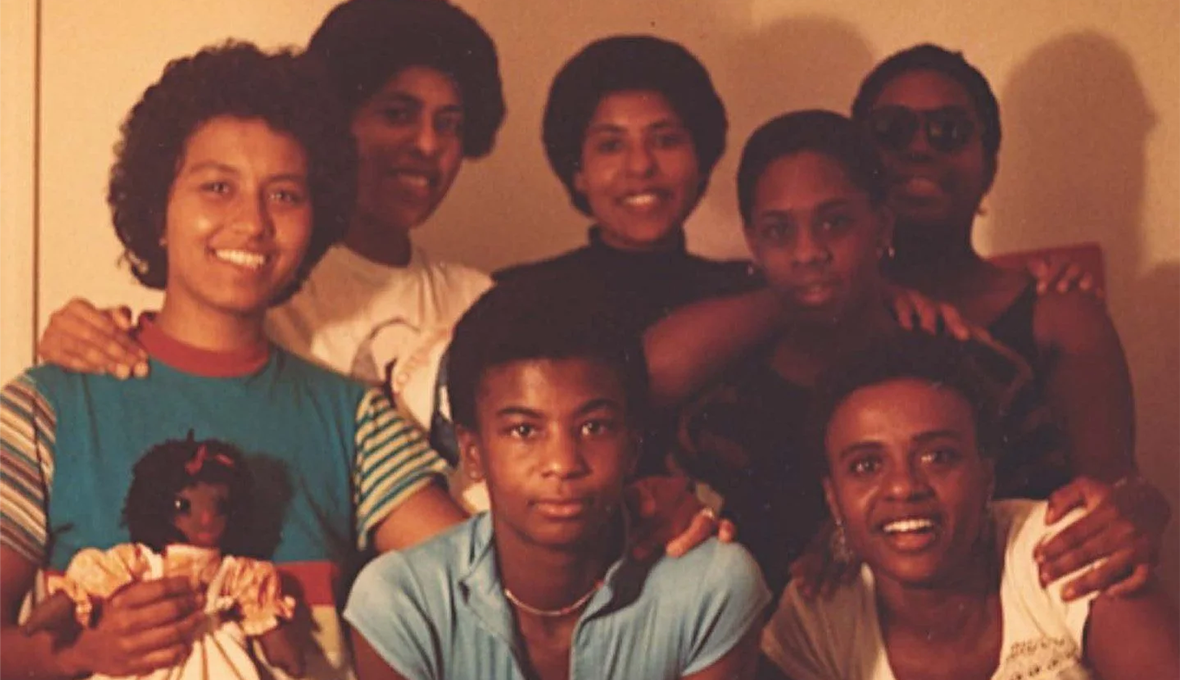
Photo: "Combahee First Retreat" from Georgia Dusk
Sources:
[1] Viktoria Ultra Omni, “Meet Georgia Dusk: A Narrative Project that is Preserving Black Birth Workers Stories in the South,” URGE, November 14, 2024.
[2] Sophie Zeigler, “Our Movements Need More Archivists,” What is Solidarity History, October 31, 2023.
[3] Dartricia Rollins, “Public Affairs: Revolutionary African Perspectives,” WRFG Atlanta, November 17, 2025.
Updated 2/25/2026